Symptom to cause to fix
These are starting points from our guides; each links to the full fix. Change one variable per shot.
| Symptom | Likely causes | Try first | Guide |
|---|---|---|---|
| Sour or thin-tasting | Shot too fast or too short; grind too coarse; dose, yield or temperature off | Grind finer; check dose and yield | Fix a sour shot |
| Bitter, burnt or ashy | Roast, grind too fine, temperature, puck prep, water or a dirty machine | Check roast and grind; clean the machine | Burnt or ashy |
| Weak and watery | Grind, dose, tamp, ratio or a machine issue | Weigh dose and yield; check grind | Weak and watery |
| Spurts, uneven flow | Channeling: water finds a fast path through the puck | Distribute evenly; tamp level | Channeling |
| Slow or stalling | Grind too fine, dose too high, uneven distribution or a machine check | Coarsen the grind a step | Slow pour |
| Shot not hot | Power, scale, settings, sensor or heating faults | Descale; check settings | Won't reach temperature |
Dial-in in four moves
- Weigh the dose. Use a scale: how to dial in at home has the routine.
- Aim for a ratio. 1:2 is a common start: 18 g of dry coffee for about 36 g of espresso.
- Time the shot. 20 to 30 seconds from the start of the pour is the usual window.
- Change one thing. Grind first, then dose, then yield. Taste, note, repeat.
Prep matters as much as the grinder: WDT and puck prep explains the distribution tools and espresso beans vs coffee beans clears up a common label question. Keep beans fresh with storage tips and know how long beans last.
Drinks: what is in the cup
Cafés vary, so we show typical builds from two sources. Open the coffee drinks chart to see 18 drinks as layered cups and compare any two. For the common mix-ups, read the guides below. No frother? Froth milk five ways.
| Question | Guide |
|---|---|
| Latte or cappuccino? | Latte vs cappuccino |
| Latte or mocha? | Latte vs mocha |
| Cortado or macchiato? | Cortado vs macchiato |
| Ristretto or lungo? | Ristretto vs long shot |
| All the drinks, side by side | Drinks chart |
Habits that make shots worse
Before changing any equipment, check these habits. They cause more bad shots than machines do, and each is free to fix.
| Habit | What it does to the shot | Change | Guide |
|---|---|---|---|
| Changing several things at once | You cannot tell which change helped | One variable per shot, grind first | Dial in at home |
| Judging by volume in the cup | Crema and bubbles make volume misleading | Weigh the espresso that lands in the cup | Weighing and dosing |
| Skipping the scale for dose | A scoop varies with the bean and the grind | Weigh the dose every time | Scoops per cup |
| Using stale or wrongly labelled beans | Flat, papery or oily tastes that no grind change fixes | Store beans well and check the roast date | Store coffee beans |
| Uneven puck prep | Water finds a fast path, so part of the puck is over-extracted and part under | Level the bed and tamp evenly | Fix channeling |
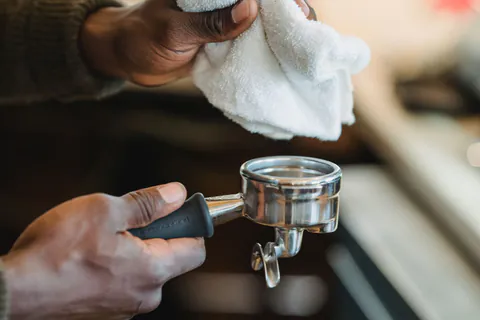
| Never cleaning the group or basket | Old oils taste bitter and rancid | Rinse after use, clean on a schedule | Clean the basket |
Notice what is missing: new gear. Most of these fixes are habits and cost nothing, which is why we link them before any product.
Where to start, by what is going wrong
The guides in this hub cover a lot of ground, so use the one that fits where you are rather than reading in order.
You just bought a machine. Start with how to dial in, then the setup checklist to see what you still need. Plan a first descale from the maker's manual, not from memory.
Your shots taste off. Use the symptom map above. Sour and bitter are opposites, so the fix goes in opposite directions: taste first, then pick the row. Sour and burnt each have a table of causes.
The machine itself seems wrong. If shots are cool or the pour stalls, rule out technique first and then read the temperature guide and the stalling pour guide. A machine problem usually shows up on every shot, whatever you change.
You want to understand your gear. The explainers cover boiler types, PID controllers and portafilter sizes, which are the terms product pages lean on most.
A simple practice routine
- Pick one bean and keep it. Changing beans resets everything you learned, so finish a bag before switching.
- Start from a written recipe. A dose, a target yield and a time window give you something to move away from.
- Taste every shot the same way. Note sour, bitter, thin or balanced in a notebook, with the grind setting.
- Move one step at a time. A single grinder step is enough; large jumps hide the effect.
- Stop when it tastes good. Numbers are a guide. A balanced cup at a slightly different ratio is a success.
After a week of this you will have a recipe for that bean and a feel for how grind changes the cup. That feel carries over to the next bag far better than any rule.
Habits that fix most shots before you change gear
Most "bad machine" days are habit problems. Four habits cover most of them, and none costs anything.
| Habit | Why it helps | Guide |
|---|---|---|
| Weigh dose and yield every shot | Without numbers you cannot tell which change worked. | Espresso ratio calculator |
| Change one variable at a time | Grind, dose and yield all move the taste; changing two hides the cause. | Dial in at home |
| Prepare the puck the same way | Clumps and uneven tamping cause channeling. | WDT and puck prep |
| Use fresh beans, stored well | Old or badly stored beans lose quality; for the NCA this is about freshness, not safety. | Store beans |
| Clean and descale on a schedule | Residue and scale change taste and temperature. | Clean and descale |
If a fix does not work after a few careful tries, the cause may be the machine or grinder. The machines hub and grinders hub explain what to look for, and the temperature guide covers heating faults.
Milk, steaming and latte art
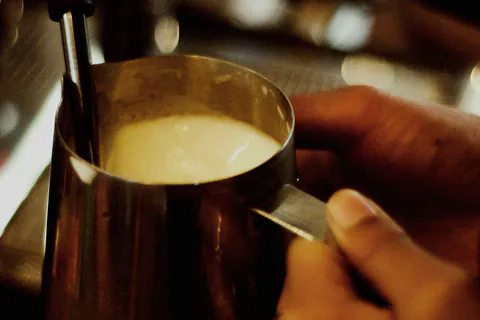
Milk drinks add a second skill. You need a way to steam or froth milk, a pitcher you can control and some practice. Read choosing a milk pitcher size for the pitcher and how to froth milk without a frother if you have no steam wand. Drink builds differ by café, so use the drinks chart to see how much milk and foam each drink typically has. If a machine does automatic milk, check what the maker says it does: our machines hub lists which of our picks offers it.
Whatever you steam, taste the espresso first. A balanced shot is easier to build on, which is why the symptom map above comes before any milk work.
Caffeine, measuring and tools
For caffeine, see how much caffeine is in a cup of coffee and caffeine in an espresso shot, or add up a day with the caffeine calculator. The FDA cites about 400 mg a day as an amount not generally linked to negative effects for most healthy adults; limits differ for pregnancy, breastfeeding, children and teens, heart conditions and some medications, so ask your doctor (FDA).
For measuring, use grams per cup and the ratio calculator. Gear lives on the machines, grinders, tools and brewing equipment hubs.